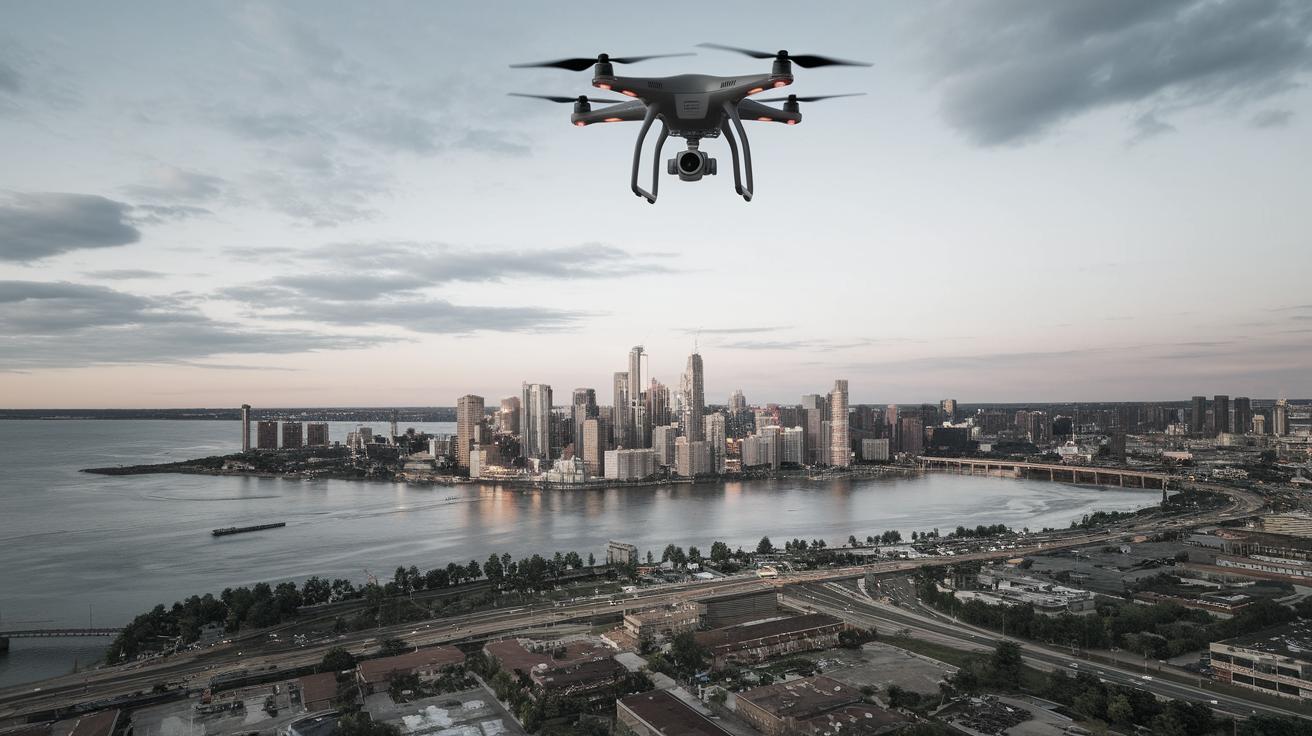
Benefits of Using Drones in Design Projects
Drones have revolutionized the way design projects are approached, especially in construction and architecture industries. These flying technological marvels provide a new perspective that contributes significantly to efficiency, cost management, and safety. In this article, we will explore how drones enhance design projects, identify barriers in the construction industry, and look ahead at the future possibilities they offer. We’ll highlight the benefits such as improved site awareness, early problem detection, efficiency maximization, monitoring capabilities, and their integration with existing tools. By delving into each of these aspects, this account provides a comprehensive understanding of why drones are becoming indispensable in modern design projects.
The Benefits of Drones in Construction
1. Drone Mapping Improves Site Awareness
Drone mapping provides construction teams with accurate and detailed aerial views of a site. This advanced perspective allows for a comprehensive overview that is difficult to achieve through traditional methods. High-resolution maps and 3D models generated by drones enable teams to visualize the entire site, enhancing their understanding of the project’s context and layout.
Moreover, with these detailed maps, site managers and architects can make informed decisions quickly. The improved site awareness helps in optimizing project planning and scheduling, thus reducing uncertainties and enhancing communication among stakeholders. Overall, drone mapping is an invaluable asset that enhances situational awareness in construction design projects.
2. Identify Problems Early with Aerial Maps
Drones facilitate early problem identification through their capability to provide consistent and real-time aerial maps. These maps allow construction teams to detect potential issues before they escalate into serious problems. For example, the early detection of structural inconsistencies or soil erosion can prevent costly delays and rework.
Using drones, teams can monitor site changes regularly and compare them with design plans to spot deviations. This proactive approach minimizes risks, enhances safety, and ensures that the project proceeds smoothly and on schedule. Such foresight is crucial in maintaining project quality and client satisfaction.
3. Maximizing Efficiency
Drones play a critical role in maximizing efficiency within construction projects. By reducing the time needed for traditional surveying and inspections, drones allow team members to focus on core tasks, thereby speeding up the overall construction process. Rapid data collection and analysis enable teams to execute projects faster and with greater accuracy.
Furthermore, drones minimize the need for manual labor associated with inspection tasks, reducing human error and enhancing productivity. The automation of data collection and processing tasks allows for more efficient use of resources and time, fundamentally transforming project delivery timelines.
4. Measuring and Monitoring Assets
Drones provide a precise and efficient way to measure and monitor assets across large construction sites. By leveraging advanced sensors and imaging technologies, drones capture accurate data regarding asset dimensions, locations, and conditions. This capability is essential for managing inventory and ensuring resource optimization.
Moreover, regular drone flights can track the progress of the construction, verify material usage, and monitor inventory levels without disrupting the site’s workflow. The data collected aids in maintaining project budgets by preventing over-purchasing and verifying supplier claims, thereby reducing waste and costs.
5. Integrate with Other Tools
One of the significant benefits of using drones is their ability to integrate smoothly with other construction technologies and software tools. Many drones come equipped with software that can seamlessly export data into CAD systems, BIM platforms, and project management tools, providing a unified workflow for teams.
This integration enhances collaboration and ensures that all stakeholders are working with the most up-to-date information. As a result, the synergy between drones and other digital tools enhances precision, reduces redundancy, and streamlines the entire project workflow.
The Barriers to Drone Adoption in Construction
Despite the numerous benefits, several barriers hinder the widespread adoption of drones in the construction industry. One of the primary challenges is the regulatory landscape which can be complex and varies by region. Compliance with airspace regulations and obtaining necessary clearances can be time-consuming and may deter companies from utilizing drones.
Additionally, there is a knowledge gap in terms of piloting and operating drones. Construction teams may require significant training and skill development to effectively incorporate drones into their projects. The initial investment costs for acquiring high-quality drones and related equipment can also be a barrier for smaller firms.
Planning the Future with Drones
As the construction industry evolves, drones are set to play an increasingly pivotal role in defining future project planning and implementation. The potential applications of drones in construction go beyond their current use, with possibilities in robotics, automation, and smart construction.
Integrating drones with AI and machine learning technologies can enhance data analysis capabilities, enabling predictive maintenance and proactive decision-making. In essence, drones are vital tools in the emerging digital construction ecosystem, offering new ways to enhance efficiency, reduce costs, and improve safety.
Related Articles
-
A Beginner’s Guide to Drone Technology in Construction
-
How Machine Learning is Transforming Construction Planning
-
Top 10 Emerging Technologies in the Construction Industry
Final Thoughts
Incorporating drones into design projects, especially within the construction sector, offers extensive benefits that redefine efficiency, safety, and cost-effectiveness. While there are barriers to widespread adoption, innovations and increasing familiarity with drone technology are paving the way for broader integration. The future of construction is poised to be dynamic, with drones serving as a critical element of the technological ecosystem that supports smart and sustainable building projects.
| Benefit/Barrier | Description |
|---|---|
| Improved Site Awareness | Provides accurate, detailed maps for comprehensive site visualization and decision making. |
| Early Problem Detection | Facilitates proactive issue identification with real-time aerial maps. |
| Efficiency Maximization | Reduces time spent on surveying and inspections, enabling faster project execution. |
| Asset Monitoring | Enables precise data collection for better asset management and resource optimization. |
| Integration with Tools | Seamlessly works with other construction software for a unified workflow. |
| Regulatory Barriers | Challenges related to airspace regulations and clearances. |
| Skill and Cost Barriers | Knowledge gaps in operation and high initial investment costs. |